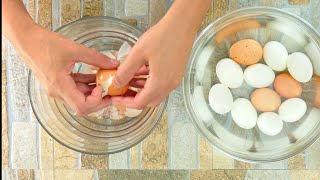
How to Peel a Boiled Egg
Peeling a boiled egg seems simple, but shell sticking to the white is one of the classic kitchen frustrations. The right technique — especially rapid cooling and how you crack the shell — makes the difference between a perfect egg and a mangled one.
Steps
Boil the eggs correctly: start eggs in cold water, bring to a boil, then cook for 8–10 minutes for hard-boiled (6–7 minutes for soft-boiled with a creamy yolk).
Immediate ice bath: transfer the eggs straight from the hot water into a bowl of cold water with ice cubes. Leave for 5–10 minutes. This stops cooking and causes the white to contract, separating it from the shell.
Gently tap the egg on a hard surface (counter, back of a spoon) to crack the shell uniformly all over — the goal is to craze the shell, not shatter the egg.
Roll the egg gently under your palm on the counter, pressing firmly but carefully, to loosen the entire shell.
Start peeling from the wider end of the egg — that is where the air pocket is, giving you a gap to slip a finger or spoon under the shell.
Peel under a gentle stream of cold water or with the egg partially submerged — water gets between the white and shell and helps fragments slip off more easily.
💡Pro Tips
- •Older eggs (2–7 days after purchase) peel far more easily than very fresh ones — the albumen pH rises over time and reduces shell adhesion.
- •Never skip the ice bath: it is the single most important step for easy peeling and for preventing the yolk from turning greenish at the edge.
- •If preparing eggs for salad or decorating, you can peel a large batch by placing the eggs in a lidded container with cold water and shaking vigorously — the shells crack on all eggs at once.
- •Use a small spoon: slip it between the shell and the white after the first crack and slide it around — it lifts the shell cleanly without touching the white.
⚠️Common Mistakes
- •Not cooling the eggs after boiling — the shell sticks to the white and crumbles into tiny fragments.
- •Hitting the egg too hard in one spot — the white gets damaged and the egg loses its shape.
- •Starting to peel from the pointed end — there is less working space and a higher chance of tearing the white.
- •Using very fresh eggs without letting them rest a few days in the fridge — peeling will be extremely difficult.