Proper Knife Grip and Cutting Safety
Mastering the correct knife grip and basic safety techniques is the first step to becoming a faster, more precise, and less injury-prone cook.
Steps
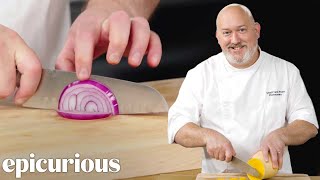
Use the pinch grip: pinch the blade between your thumb and index finger just above the handle, and wrap the remaining fingers around the handle.
Hold your free hand in a claw grip (knuckle grip): fingers curled inward, with the knuckles acting as a guide for the knife blade.
Make sure your cutting board is stable — place a damp towel or non-slip mat beneath it before you start.
Move the knife with a rocking motion: the tip of the knife stays in contact with the board while the heel rises and falls.
Advance the claw grip backward with each cut, guiding the blade with your knuckles, not your fingertips.
Never catch a falling knife — let it fall and step back. Always place knives away from the counter edge.
💡Pro Tips
- •A sharp knife is safer than a dull one: it cuts correctly without excessive force that can deflect the blade.
- •Practice the pinch grip with a regular chef's knife for a few minutes a day — it becomes a reflex within weeks.
- •When cutting round ingredients (carrots, potatoes), create a flat surface with a first cut for stability.
⚠️Common Mistakes
- •Gripping the knife too far back on the handle — you lose control and precision.
- •Leaving fingers flat instead of in claw position — high risk of accidental cuts.
- •Cutting toward yourself instead of away from your body — a dangerous direction that increases injury risk.
- •Using a sliding cutting board — instability leads to uncontrolled knife movement.